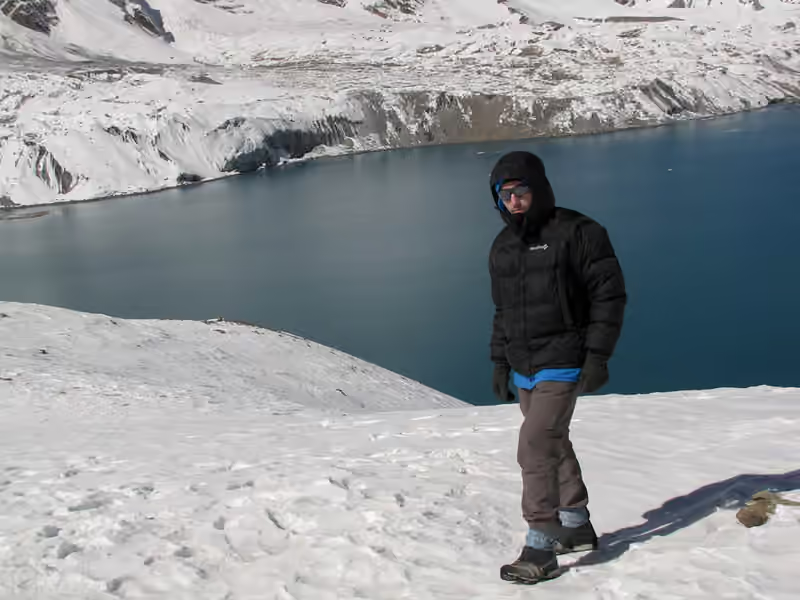
 When I look at the photos taken at Lake Tilicho, I don’t see anything special about it. Just water at the foot of an ice-covered mountain. That can be said about the picture, a pale copy, but never about the original. When you crawl up to it, having spent your entire supply of vital energy on the endless climb, it — the Great Lake — is so vast, and you — a human being — are so small, that the only thing you have a right to do is pray quietly.
Route: BLT (Tilicho base camp) — Lake Tilicho — BLT — Khangsar.
Covered: 20 km in 10 hours.
Total ascent – 1200 m, total descent – 1500 m.
Altitude above sea level: maximum — 5000 m, overnight stay — 3734 m.
Terrain: dense firn, stony scree.
5:00. Despite yesterday’s little party we woke up a mere 6 hours after we had, despite the night cold, fallen asleep. With this ungainly sentence I have tried to convey the discomfort you feel when you are hot, cold, cramped and slightly short of oxygen all at the same time.
In the neighbouring rooms people were still asleep (the sound carries beautifully there), but in the kitchen life was already in full swing and I had no trouble getting hold of two litres of boiling water at prices somewhere above the clouds. Clouds, by the way, are nowhere in sight, the sky is still strewn with stars, steam pours out of my mouth — I am thinking hard about how to dress for the climb.
While we were getting dressed (thermal underwear, fleece, windbreaker, mask, gloves) and packing the backpack (down jackets, thermos, chocolate, biscuits, nuts), it became perfectly clear that Taras would not be going to the lake (the little party, however).
6:00. We leave the camp. It seems we are the first. Not for long, though — only half a mile (a fun word, much more fun than half a kilometre) from the base we are caught up by Stas (a Washingtonian living in Israel). Together we look for a way across the stream. In the daytime you can easily hop over it on the stones, but overnight they have been covered with a thick film of ice, and we have to look for a shallow spot where it won’t be scary to nip straight across the ice.
Stas ran off ahead. We could not even dream of his speed. The mountain tops behind us are already flooded with sunlight, while we are still freezing in the shade. You can see ever new little groups of trekkers setting out from the camp.
8:50. From the Base Camp itself and right up to now the climb has been an endless «slanting shelf» — a straight path traversing the slope at a slight angle. And now at last the switchbacks begin. That means the pass is already somewhere close by (horizontally), but considerably above us.
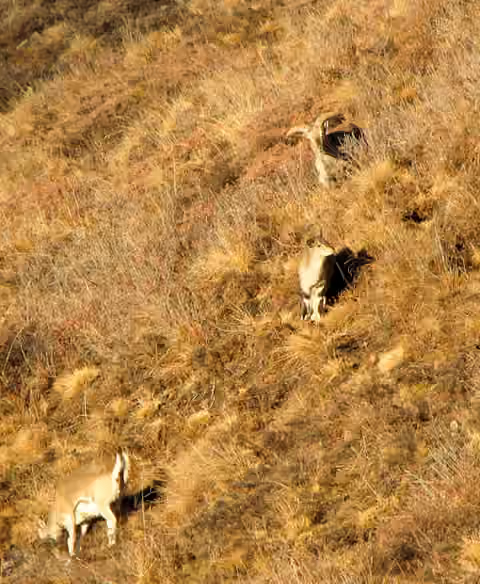
mountain goats
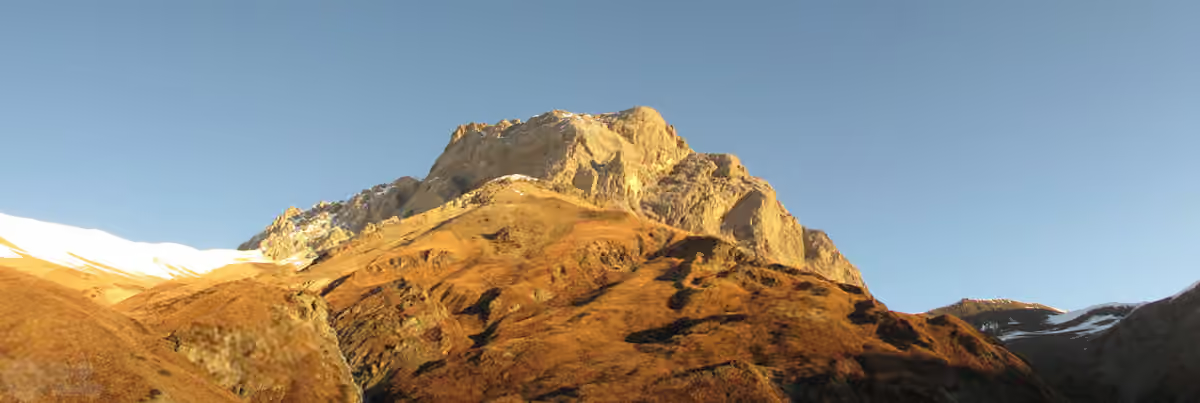
the summits are already in the sun
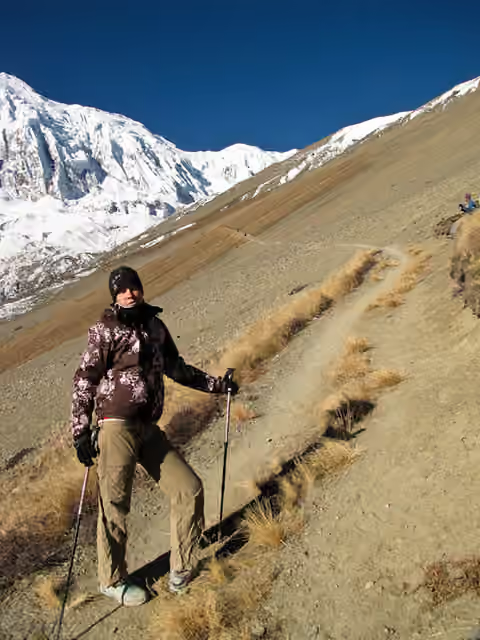
climbing the slanting shelf
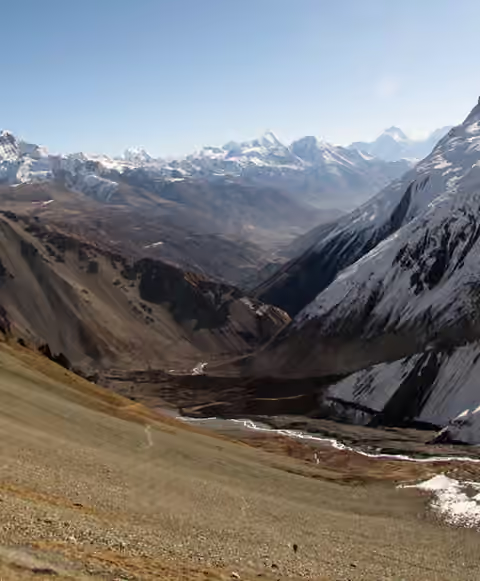
a micro-human
There are lots of tourists around (they are actually quite far away, the visibility is simply good). Almost everyone we know from the trek has caught up with us and overtaken us: the Dutch, the Germans, the Sokol yogi and even the eternally lost Paganel. I feel all right (heart and breathing are normal), but my legs flatly refuse to move. Just a wild weakness and sluggishness in the limbs. We take a break and I remove my knee pads to improve the blood circulation. I don’t remember whether I took off the thermal underwear, but compared with the morning the air has become much warmer.
9:33. We met Stas, he is already on his way back from the lake. And we are only just approaching the snow zone. The snow is very dense, left over from last year. We needn’t have put on the gaiters — the snow doesn’t even try to get into our trainers.
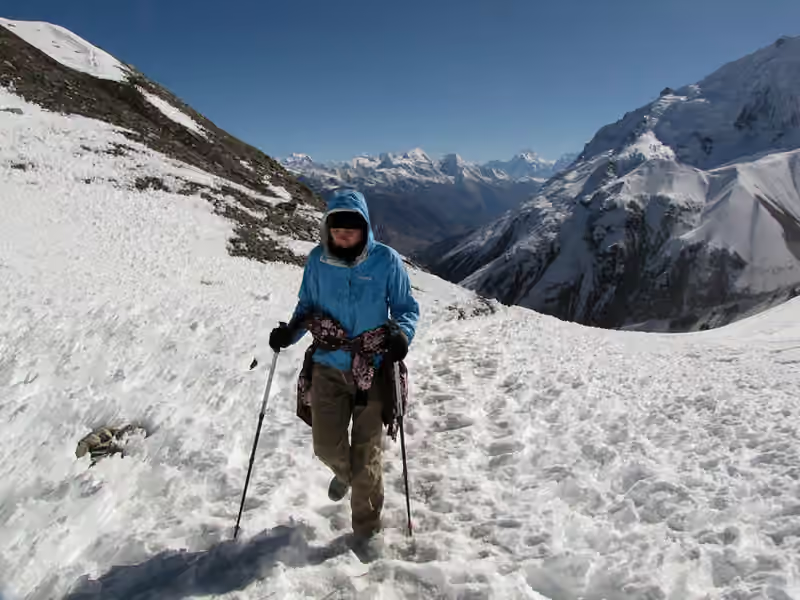
crossing the pass
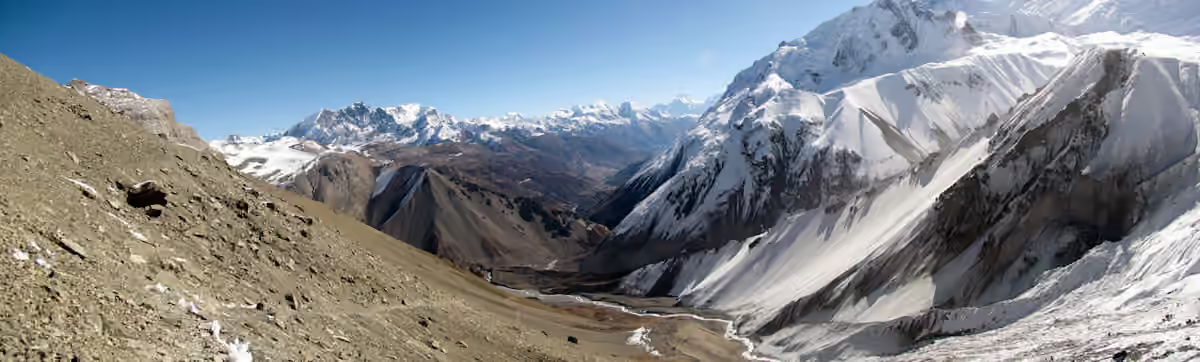
the view from the Tilicho pass
10:00. The last metres and minutes before the lake drag on endlessly. I stare spellbound at the shining wall of mountains. Thank God my legs are not standing still all this time, but keep shuffling along in Lilliputian steps.
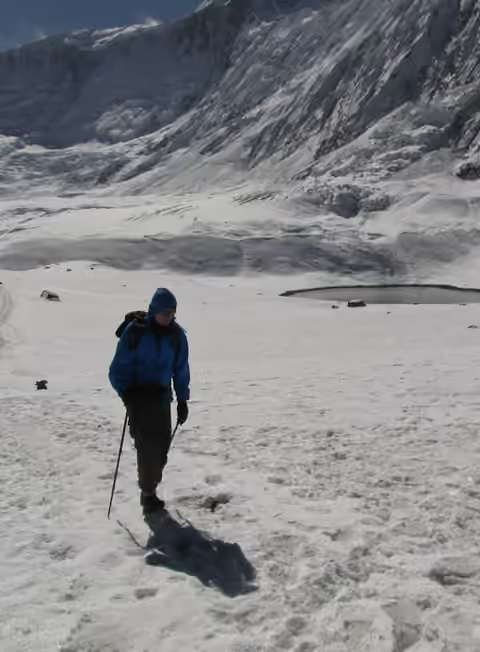
across the snow in trainers
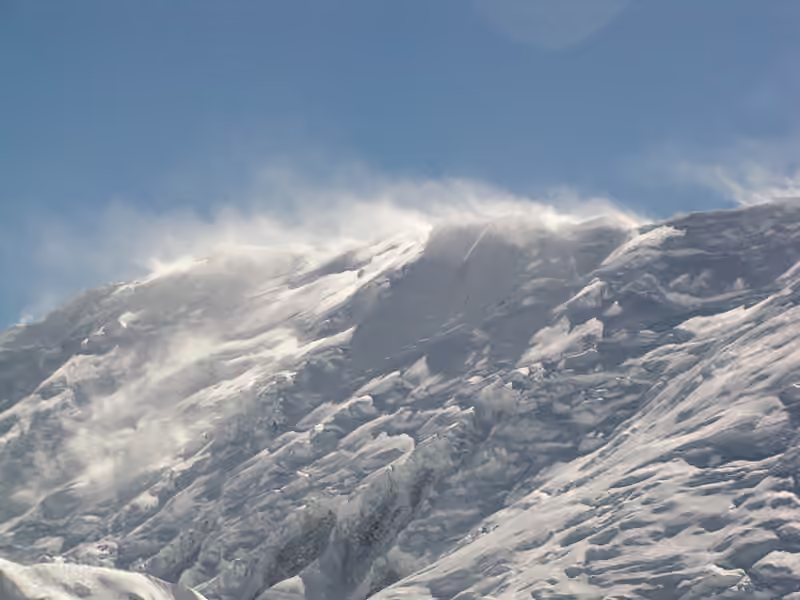
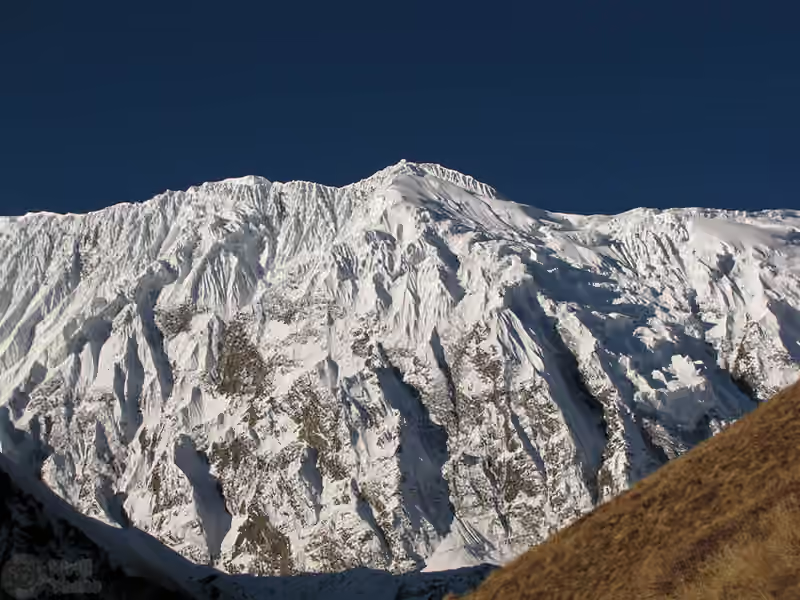
snow flags above the ridge
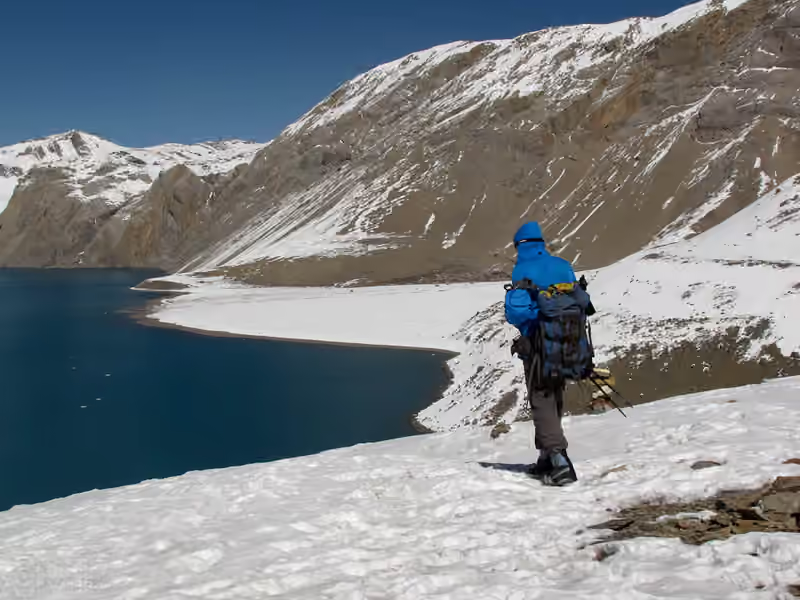
the last metres
10:32. At last we come up to the lake. I planned the sequence of actions long ago. So, here goes: first — take off the backpack, second — shake everything out of it onto the snow, third — put on the down jacket, fourth — collapse onto the empty backpack, fifth — savour the bliss, sixth — drink some tea. Such simple joys of life, combined with the feeling of a duty accomplished and the stunning views, create an indescribable festive atmosphere. Fortunately, almost all the tourists have already run off downhill, and we are left practically alone with Tilicho.
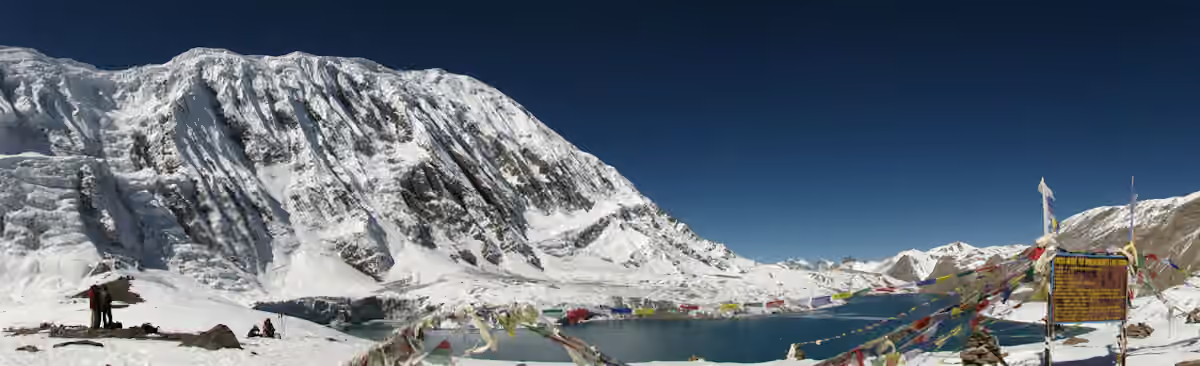
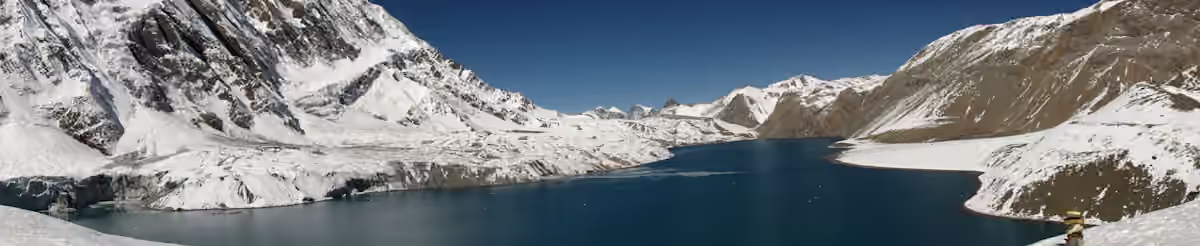
By the way, saying that we reached the lake is just a manner of speaking. The bank is very high; from us down to the water it is at least 100 metres vertically and 300 metres horizontally. The estimate is very rough, most likely completely wrong. It is impossible to measure anything at all here. The lake overwhelms you with its scale, next to it everything seems tiny — the descent to the water, and the glacier sliding off the mountain straight into the water, and the huge, by all appearances, icebergs cutting through Tilicho’s blue waters. It is unclear why the lake does not freeze (only a narrow strip of ice reaches towards the centre from the northern shore).
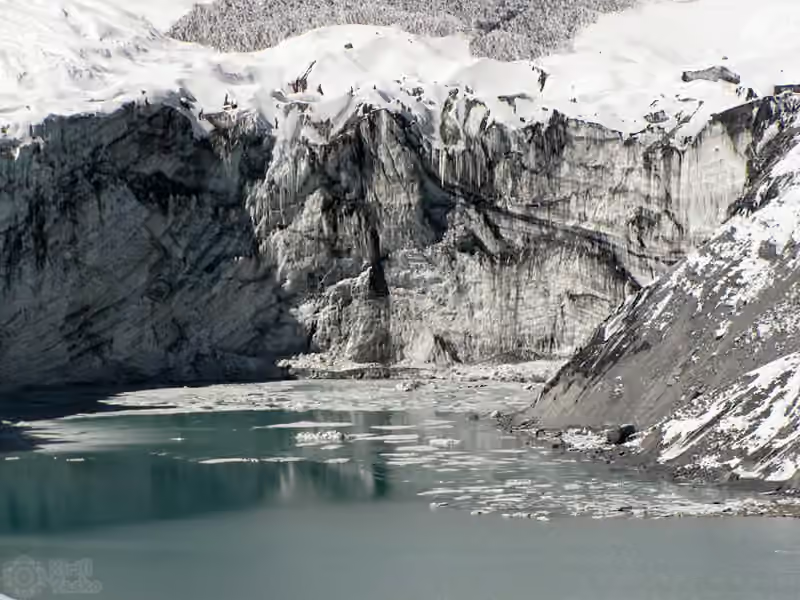
the glacier breaks off into the lake
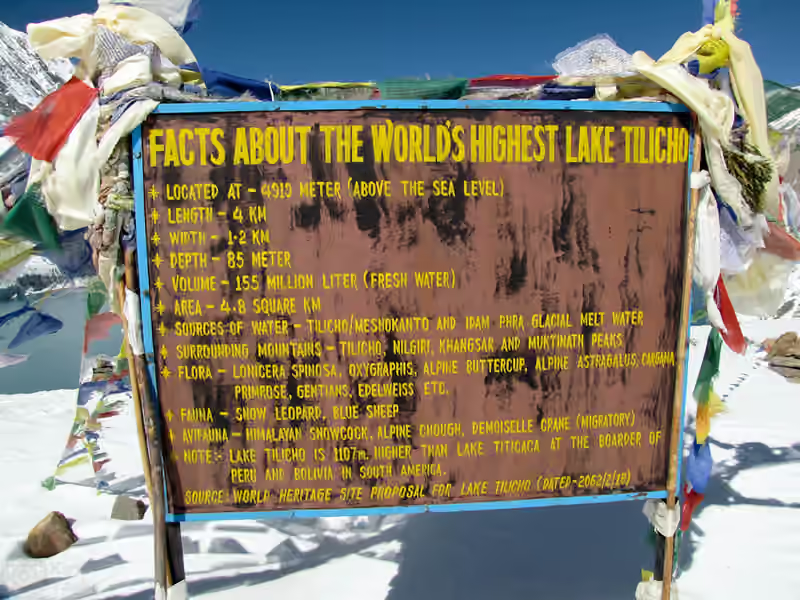
information about Lake Tilicho
11:00. We take off the down jackets and head back. My legs have gathered strength and walk much better. On the other hand, the snow has thawed a little and it has become slippery — if you walk along the beaten track, you keep slipping on the dents left by other people’s feet. I walk parallel to the track over untrodden snow, it is a little easier that way.
11:30. Loaded porters are crawling towards us. This is that very expedition of pensioners. The old boys themselves are marching along quite briskly a kilometre behind.
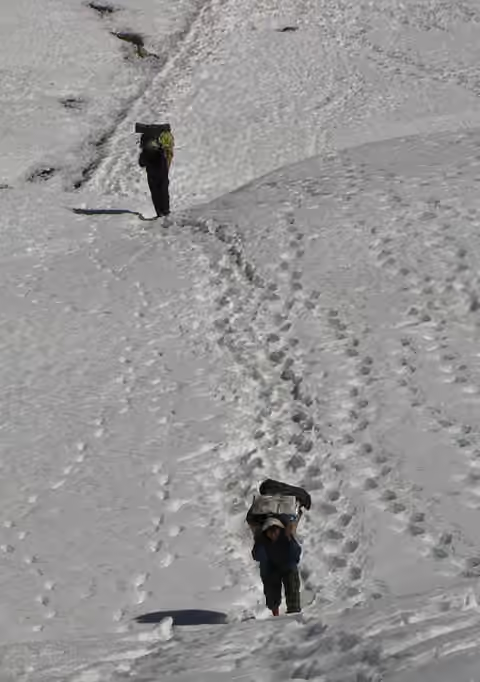
a line of porters
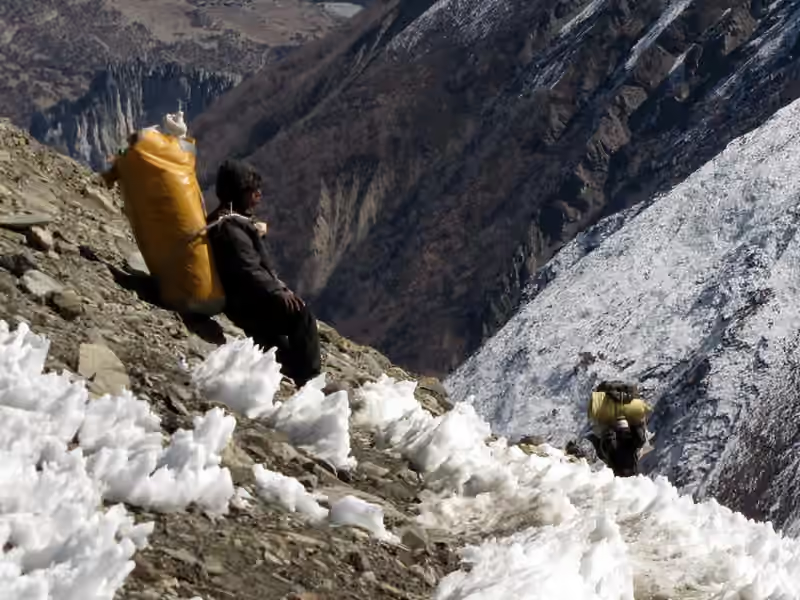
a porter taking a break
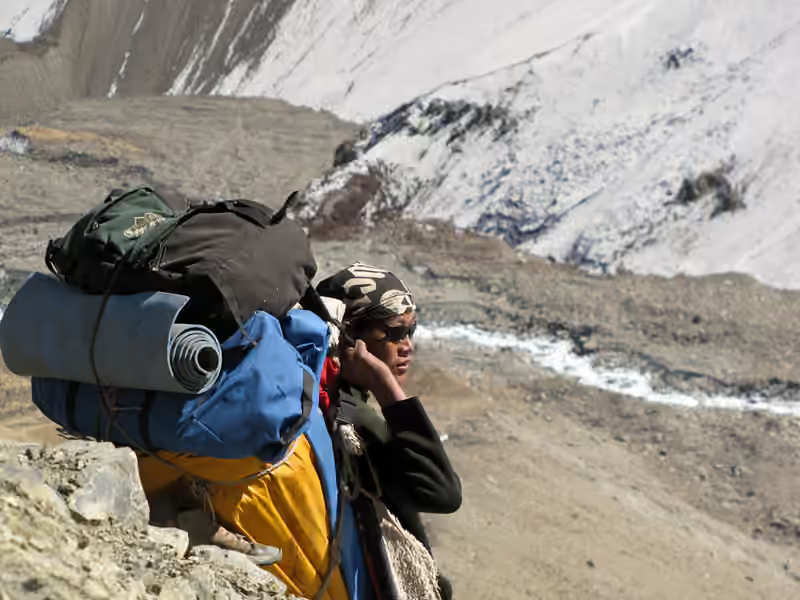
a Sherpa and his bundle
12:00. We have crossed the pass and finally got out of the snow zone. Walking on a dry path is far more pleasant and easier — on the descent we build up a decent speed. About time too — I was fed up with feeling like a snail on the slope (© A. and B. S.). We race past glaciers and glints of sunlight, past grazing yaks and a shepherd having his lunch, past the long-since-melted stream.
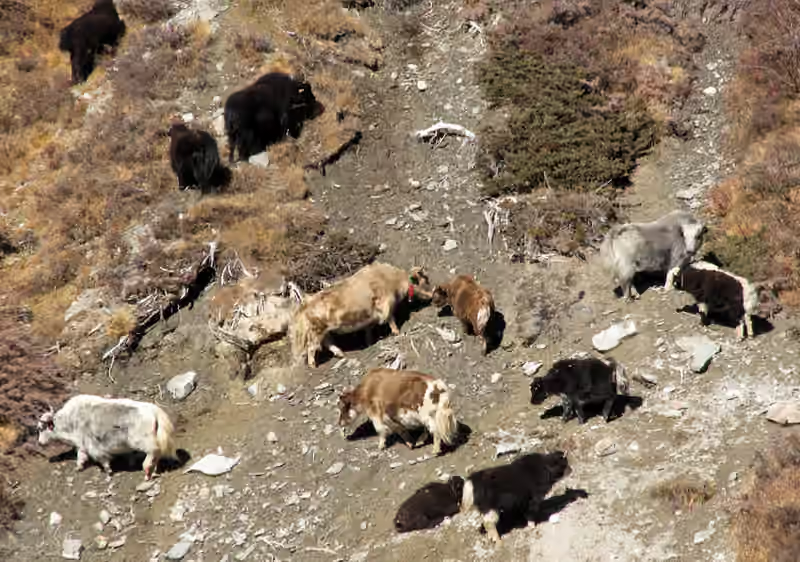
grazing yaks
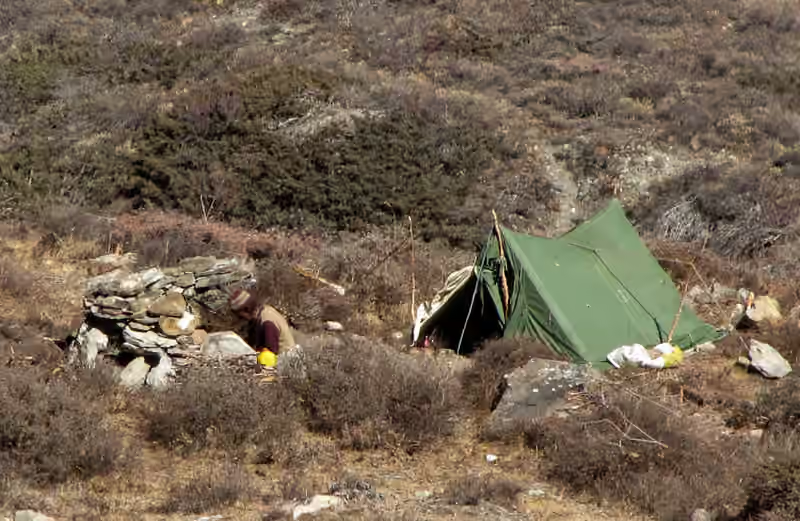
the shepherd’s tent
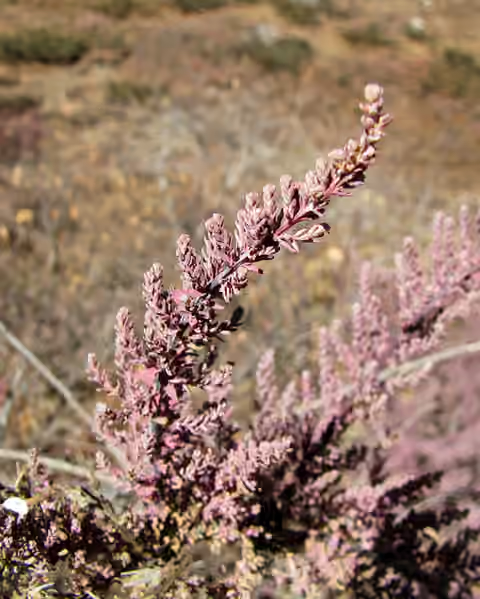
a red branch
13:00. We burst into the base camp. It is surprisingly empty there — all «our lot» have already left, and the new «intake» has for some reason not turned up yet. Yesterday at this hour life was in full swing here, people were fighting over rooms, eating rice and reading books in incomprehensible languages. And today there is nobody, only Taras in proud solitude poring over Pelevin.
We order lunch. The menu of Nepali guesthouses usually has two kinds of porridge — oat and some other one (I have forgotten its name). So then, never order that second porridge — a very unpleasant combination of consistency, taste and smell. I love porridge very much, but this one I ate with enormous difficulty.
14:00. We leave Tilicho Base Camp, having first settled the bills. Two lunches, a dinner, boiling water and a night’s lodging cost us 2685 rupees (that is 35 bucks) for the three of us — a fairly expensive little place.
I start falling asleep right there on the move. The early rise, the recent lunch and Gurdjieff’s tales (tedium, tedium, tedium) have finished me off. Sleeping and generally not looking at your feet while moving over scree is very bad for your health, so I finally change the record in my player (Hallelujah!!!).
I put on a selection of invigorating music, compiled specially before the trip to Nepal. It all starts with «One shot at Glory» by Judas Priest, then «Call my Name» by Dee Snider and off it went — a whole line-up of good old heavy. The music literally breathes strength into me, straightens out the wings squashed by my backpack. The pulsing rhythm passes from my ears straight down into my legs and I tear ahead as if stung.
One hour of musical injections was enough to restore my strength completely. Now I could switch to something calmer, so that the «doping» would not wear thin and lose its miraculous power in the future. I start listening to Bernhard Grzimek’s book «From the Cobra to the Grizzly Bear». The man writes very interestingly about his work (he is the director of the Frankfurt Zoo), about all sorts of exotic critters and about how humans foul up nature.
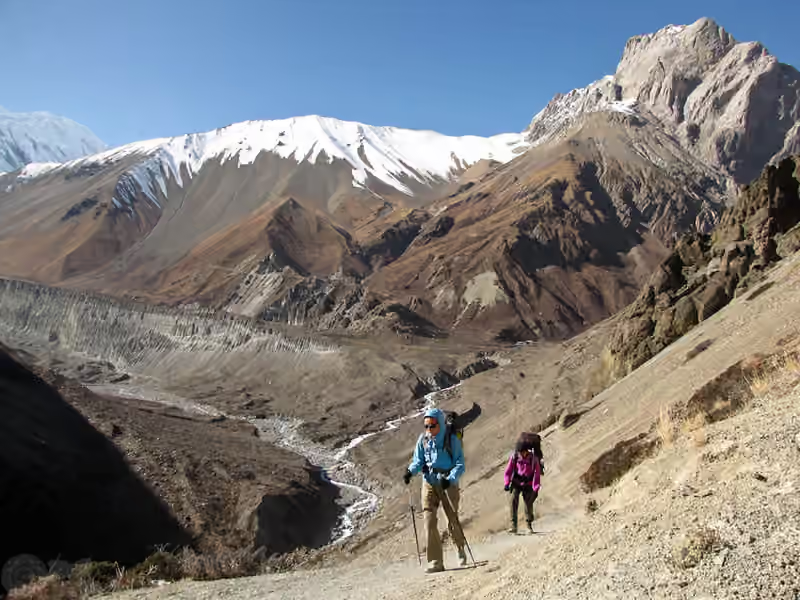
the road back
17:00. At the entrance to Khangsar we meet Paganel. As is the custom in the evenings, he is staring in bewilderment at the screen of his GPS, glancing around from time to time. My legs were giving way from fatigue and it was already getting dark, so I did not photograph him. A pity — it seems I have not a single shot left of this picturesque tourist.
We successfully move into the already familiar hotel. Our things, left there for safekeeping, are perfectly intact and feeling great. But we are so exhausted that we have dinner on a reduced programme (no cards and no long discussion of tomorrow’s prospects). I only manage to describe this day briefly in my notebook and to note the fact that during our short absence the menu has managed to change. The prices have gone up a little, but that is only right, since before that it was indecently cheap here.
Everyone off to bed. Tomorrow we will be solving the housing problem.
This is not the end yet! The report is regularly supplemented with new articles. Subscribe to RSS and the to follow the updates.